
Audio version
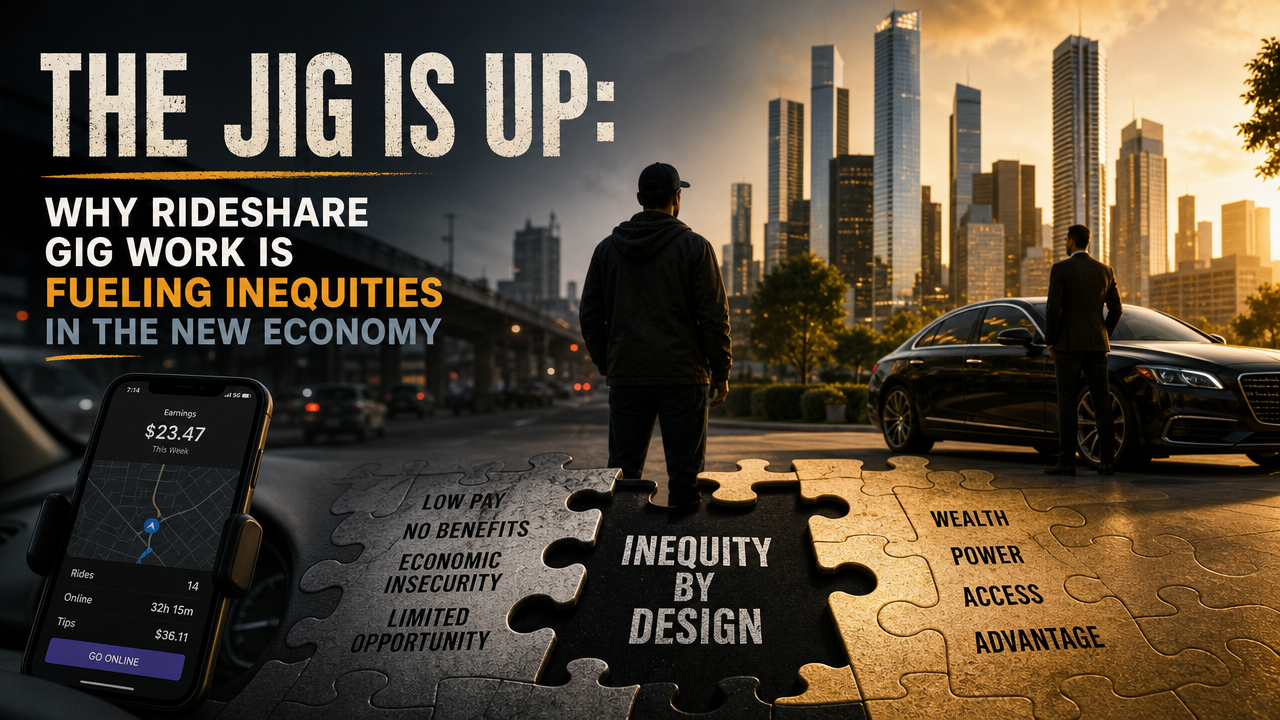
In the spring of 2020, I ran into some financial difficulty that forced me to pick up gig work in order to make ends meet for a few weeks. Now, let me give you a little bit of information about myself. First, I have two degrees. My Bachelor's is from a small, private, elite college in New England. My Master's is from an even more elite university in a highly technical profession. Additionally, I went from an annual salary of $100,000 to savings that, in hindsight, were meager. I was living off of $1,200 a month. I share this with my readers to demonstrate that I am not one of the many Americans who depend on rideshare income to make ends meet. I was trying to build a business that was slow to take off and needed to supplement the income that my domestic partner was bringing in. So what better way to do it than with gig work? You can work when you want and as much as you need. Plus, the only barriers to entry were a smartphone, a clean driving record, access to a vehicle, and the drive to work. I met all the qualifications, so I thought, why not? I would put a few dollars in my pocket and meet interesting people, just like how it is depicted on the shows I watch on Netflix. So I dove in headfirst without doing much research. Boy, was I surprised! The experience was nothing like I expected. Okay, so let me provide some context. First of all, I did not drive during the weekdays. I drove on weekends when there was enough traffic to justify the time put in. I normally started around 5 p.m. on Friday and worked well into Saturday morning. I wanted to catch the crowd leaving work or school to head out to parties, pubs, or just an evening out somewhere. According to my app, there would be a greater likelihood of price surges during those hours. Disclaimer: I did not research pricing surges beforehand. Also, I live in Western New England where there are several universities, and these institutions are a hub of activity. That said, before I started driving, I did research the average hourly wage for a rideshare driver in my area. According to Google, it averaged around $22 per hour. What I noticed after two days of driving was that my average hourly wage never went above $20, and that included tips. Now let me illustrate this point a little further. I drove a passenger to the airport, which was approximately 55 miles away from the campus where she originated the trip. I mention the miles first because rideshare apps speak the language of miles, not time. Now, let us talk about time. The trip took approximately one hour. I surprised myself and proved to be quite the gracious rideshare driver. I helped this passenger with her luggage, provided her with a few goodies, and played soothing music so that she could enjoy the ride and fall asleep. All in all, I gave her a very comfortable ride and in turn, she gave me a $28 tip. However, I was not compensated for the one hour it took me to return across state lines, and I was not allowed to pick up another passenger during that time. So I had no income for that entire hour back. What I noticed at the end of the night, when I calculated my earnings, was that my earnings from the hour before the airport trip were less than $5. Moreover, my earnings for the night averaged approximately $20 including tips. This both puzzled and enraged me. I also knew it could be a coincidence, so I drove a few more days to confirm whether a pattern existed. Sure enough, the pattern was there. I could not beat the rideshare algorithm. Now let us talk about the expenses I never considered before becoming a rideshare driver. First, there were the costs of gas. Luckily, I have a hybrid vehicle, so fuel costs did not bankrupt me. However, I wondered about those who have less fuel-efficient cars or even SUVs. How could they make a profit from this type of work? Even more importantly, how were they making ends meet? Surely, this could not be how they were piecing together an income. On a related note is the issue of mileage. Most nights, I put an average of 138 miles on my car. What I did not understand until the very end was that I was not being reimbursed for the miles I drove in order to pick up passengers. Meaning, when my back seat was empty after dropping off a passenger in a remote area, I was not compensated for those miles. Next, there was the cost of cleaning the car. For safety reasons, since my vehicle is the primary mode of transport for my children, I was cautious about cleaning it thoroughly. I cleaned the interior and exterior of my car before and after every shift at the car wash, at a cost of approximately $15 per day. Then there were the costs of the perks that customers expected you to have in your car. For example, one passenger requested painkillers during his short ride. Another requested a bottle of water, which shocked me, and the passenger was equally astounded when I could not supply any. Eventually, I went out and got a few perks like facial tissue, individually wrapped pain relievers, and mints, all in the hopes of getting better reviews. Though my reviews did improve after that, my compensation did not. Needless to say, after two weekends of being a rideshare driver, I stopped. First, because the compensation was poor, and second, because a global pandemic had become full-blown. My partner and I decided to find other ways to supplement our income since the risk associated with driving during a pandemic far outweighed the compensation being provided. I also came back extremely tired after each shift, having earned an average of only $150 per night, just a few dollars higher than the minimum wage in our state. We brainstormed other options and ultimately found other ways to supplement our income. So, here is what I observed about rideshare companies during my short stint: - The algorithm never allowed me to earn more than $20 an hour. That includes tips, which were sometimes quite substantial. - When I crossed state lines, I was not able to pick up riders on the way back, which often meant driving 20 to 30 miles with no passenger in the back seat. - Short trips offered the least compensation. I vividly remember a passenger who knew how to game the algorithm. He ordered a trip that took him approximately four blocks to McDonald's. We waited 15 minutes in the drive-through for his order and then returned to his house. For the entire trip, I was compensated approximately $2, and he gave me no tip. - There are companies that specialize in having rideshare drivers market their products. They offer items like water, chips, and even hand cream for drivers to hand out to passengers. This is the most cost-effective way to offer passenger perks. All in all, I did get something out of the rideshare experience, namely meager compensation and enough material to write this article. Many articles about ridesharing are written in the third person. I was able to provide a firsthand account. I write this article as an urban development professional who is trained to think deeply about how cities, the workforce, and labor are changing. My concern is that technology and the new gig economy are helping to perpetuate a cycle of poverty. Millions of dollars are made per quarter by technology companies that do not fairly compensate their drivers, who are the lifeblood of their business model. More importantly, because these workers are considered independent contractors, they often do not receive benefits such as unemployment insurance when they are unable to work due to injury or when a catastrophe like a global pandemic strikes. I wonder if this is our future. Are we, as a society, using new tools to perpetuate old social and economic injustices?
На данном сайте можно получить интересную информацию. https://pilot-club.ru/info/2026-07-18-v-posyolke-krasnyy-poyavilsya-pervyy-v-smolenskoy-oblasti-detskiy-kulturno-prosvetitelskiy-tsentr-svetlyachok/
На данном веб-сайте есть шанс обнаружить интересную информацию. https://omskapteka.ru/info/513-svetyashchiesya-oduvanchiki-vozvrashchayutsya-na-shvetsova-restavratsiya-art-installyatsiy-v-naryan-mare.htm